Pregnancy often feels like it begins with a positive test. In reality, the story starts earlier—quietly, gradually, and mostly unseen. Weeks 1-4 are the foundation stage. They set the tone for everything that follows, even though many women don’t yet realize they are pregnant.
These early weeks are less about visible changes and more about preparation. Your body is getting ready. Hormones are shifting. Cells are dividing. Life is lining up its first steps, even before it has a shape or a heartbeat.
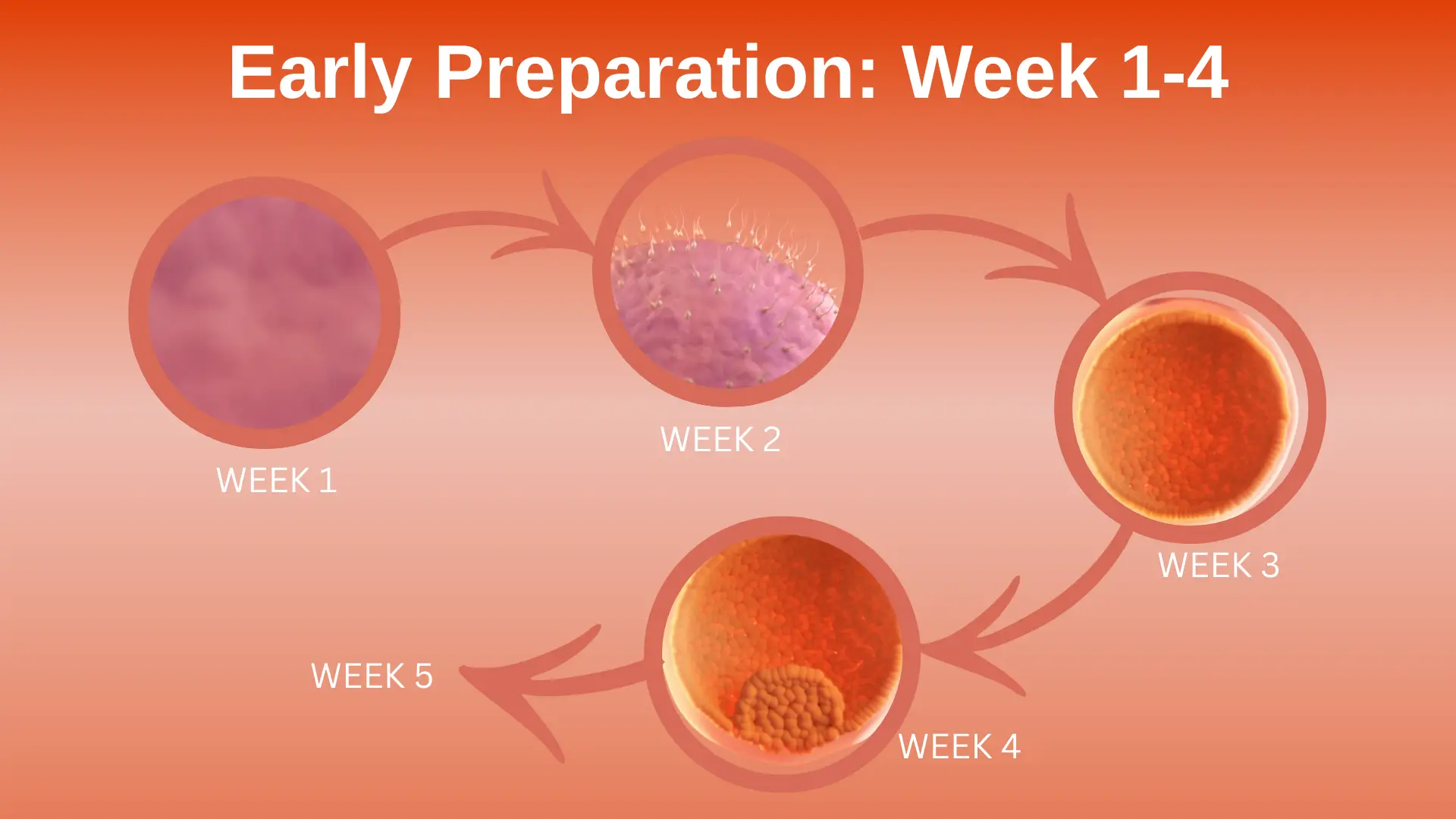
This guide walks through Week 1 of pregnancy, Week 2 of pregnancy, Week 3 of pregnancy, and Week 4 of pregnancy in a clear, calm, and science-based way. Think of it as a gentle map for the very beginning of the journey.
Week 1 of Pregnancy
Pregnancy Changes During the Week
Week 1 of pregnancy may feel confusing because, medically, you are not pregnant yet. Doctors count pregnancy from the first day of your last menstrual period. That means Week 1 of pregnancy is actually your period week.
During this time, your body is doing important behind-the-scenes work. The uterus is shedding its old lining, making space for a fresh one. Hormones like estrogen and progesterone are at their lowest point, which triggers menstrual bleeding. Once the period ends, hormone levels begin to rise again, preparing for ovulation.
Think of this week as resetting a room before a new guest arrives. Everything old is cleared away so something new can settle in comfortably. While there is no embryo yet, your body is laying the groundwork for possible conception in the coming weeks.
You may notice typical period symptoms like mild cramps, lower back pain, fatigue, or mood changes. These are normal and not a sign of pregnancy. However, what you do now still matters. Good nutrition, rest, and hydration can support a healthier cycle and improve the chances of successful conception later.
Even though pregnancy has not technically begun, Weeks 1–4 are treated as part of the pregnancy timeline because early preparation matters more than most people realize.
Baby’s Growth Stage
There is no baby yet in Week 1 of pregnancy. No fertilized egg. No embryo. No implantation.
Instead, this stage is about potential. Inside your ovaries, several eggs are maturing, each wrapped in a tiny fluid-filled sac called a follicle. Only one of these eggs will usually become dominant and prepare for release during ovulation in the next week or so.
You can think of this stage like selecting seeds before planting. The soil is being prepared, and the seeds are waiting for the right moment to grow. Nothing visible is happening, but the process is already in motion.
While there is no fetal development at this point, your lifestyle choices still influence what comes next. Balanced meals, gentle movement, and reducing stress help support healthy egg development. Folic acid intake during this stage is especially important because it supports early cell division once fertilization happens.
Week 1 is quiet, but it is not empty. It is the pause before the story truly begins.
Internal Development of the Baby
In Week 1 of pregnancy, there is no internal development of a baby yet. However, important internal changes are happening inside you.
Your reproductive system is resetting. Hormones are recalibrating. The brain, ovaries, and uterus are working together through a delicate feedback system. This coordination ensures that ovulation, fertilization, and implantation—if they happen—occur in the right order.
While there is no embryo forming, the quality of the egg that will be released soon is influenced by your overall health. Nutrients like folate, iron, iodine, and healthy fats play a role long before pregnancy is confirmed.
This is why many experts say pregnancy preparation begins before conception. The internal environment you create now becomes the environment your baby will eventually grow in.
Estimated Size and Weight of the Embryo
There is no embryo in Week 1 of pregnancy, so size and weight are not applicable yet.
Common Symptoms in the Mother
Most symptoms during Week 1 of pregnancy are actually menstrual symptoms. These may include:
- Vaginal bleeding
- Mild to moderate cramps
- Lower back discomfort
- Fatigue
- Headaches
- Mood swings
These signs are normal and expected. They do not indicate pregnancy, even though they fall within the pregnancy timeline.
Emotionally, some women feel calm, while others feel more sensitive or irritable. Hormonal changes can affect sleep and concentration as well.
If you are trying to conceive, this week is a good time to start paying attention to your body. Notice your cycle length, bleeding pattern, and overall energy levels. This awareness can help you recognize early pregnancy signs later on.
Week 2 of Pregnancy
Pregnancy Changes During the Week
Week 2 of pregnancy is all about preparation and timing. Menstrual bleeding has usually ended, and hormone levels are rising. Estrogen increases, which helps rebuild the uterine lining into a soft, nutrient-rich surface ready for implantation.
Ovulation typically occurs near the end of this week. One ovary releases a mature egg, which travels into the fallopian tube. This egg survives for about 12 to 24 hours. If sperm meets the egg during this window, fertilization can occur.
Your body may give subtle clues that ovulation is near. Some women notice clearer, stretchy cervical mucus, similar in texture to raw egg whites. Others feel a mild ache on one side of the lower abdomen, known as ovulation pain.
Week 2 is like opening a narrow door. Timing matters. This is the most fertile period in the entire cycle, and it plays a central role in Weeks 1–4 of early pregnancy.
Baby’s Growth Stage
During most of Week 2 of pregnancy, there is still no baby. However, everything is aligning for conception.
If fertilization occurs at the end of this week, the baby’s story officially begins. The sperm penetrates the egg, and their genetic material combines to form a single cell called a zygote. This tiny cell contains all the DNA needed to shape eye color, hair texture, height tendencies, and much more.
At this stage, growth is measured in potential rather than size. The fertilized egg will soon begin dividing rapidly, starting a journey toward the uterus.
Internal Development of the Baby
If fertilization happens during Week 2 of pregnancy, the zygote begins dividing within hours. One cell becomes two. Two become four. Then eight. This process is called cell division, and it happens quickly and precisely.
As the cells multiply, they stay together in a small cluster while traveling through the fallopian tube. Each cell is identical at first, but soon they will begin taking on specific roles.
This stage is delicate. The body works hard to protect and guide this early life, even before implantation occurs.
Estimated Size and Weight of the Embryo
If fertilization has occurred, the embryo is microscopic—smaller than a grain of sand—and too small to measure in weight.
Common Symptoms in the Mother
Most women do not feel pregnant during Week 2 of pregnancy. Symptoms are subtle or absent.
Possible signs include:
- Increased cervical mucus
- Mild lower abdominal twinges
- Slight increase in energy
- Heightened sense of awareness of the body
Emotionally, some women feel hopeful or anxious, especially if trying to conceive. Others feel completely normal.
It is important not to over-interpret every sensation. Many ovulation signs are also part of a normal cycle.
Week 3 of Pregnancy
Pregnancy Changes During the Week
Week 3 of pregnancy is when fertilization usually happens. The fertilized egg continues its journey toward the uterus while dividing into more cells.
Hormones begin to shift more noticeably. Progesterone rises to support the uterine lining and prevent another ovulation. Your body is quietly switching modes—from preparation to protection.
Although implantation has not happened yet, the process is underway. The uterus is becoming a safe landing place.
This week is often completely symptom-free, which can make it feel uneventful. In reality, this is one of the most important weeks of early development.
Baby’s Growth Stage
The fertilized egg is now a rapidly dividing cluster of cells called a blastocyst. It is still incredibly small but highly active.
The blastocyst contains two main parts:
- The inner group of cells, which will become the baby
- The outer layer, which will help form the placenta
This stage is like laying the blueprint of a house. The structure is planned long before the walls go up.
Internal Development of the Baby
During Week 3 of pregnancy, cells begin organizing themselves. Some are marked for future roles, such as forming the brain, spinal cord, or organs.
The blastocyst prepares to attach to the uterine wall. Once implantation begins, pregnancy hormones increase more strongly.
This is a fragile stage, which is why gentle care matters—adequate nutrition, rest, and avoiding harmful substances.
Estimated Size and Weight of the Embryo
The embryo is about the size of a pinhead and weighs less than a milligram.
Common Symptoms in the Mother
Some women notice very mild symptoms, such as:
- Light spotting (implantation bleeding)
- Mild cramps
- Fatigue
- Breast tenderness
These signs are easy to miss or confuse with premenstrual symptoms. Many women feel nothing at all.
Emotionally, anticipation may grow, especially if pregnancy is desired.
Week 4 of Pregnancy
Pregnancy Changes During the Week
Week 4 of pregnancy is often when pregnancy becomes real. Implantation is complete or nearly complete, and the body begins producing human chorionic gonadotropin (hCG).
This hormone supports the pregnancy and is what pregnancy tests detect. A missed period is often the first clear sign.
Your body is now fully supporting early pregnancy, even though the changes are still subtle on the outside.
Baby’s Growth Stage
The embryo is now firmly attached to the uterus. Basic structures begin forming, including the early foundations of the brain and spinal cord.
The placenta starts developing, though it is not fully functional yet. The baby is still tiny but growing with purpose.
Internal Development of the Baby
During Week 4 of pregnancy, the neural tube begins forming. This structure later becomes the brain and spinal cord.
Cell layers are forming that will develop into organs, muscles, skin, and bones. Everything is basic but incredibly important.
Estimated Size and Weight of the Embryo
The embryo is about the size of a poppy seed—roughly 1–2 millimeters long.
Common Symptoms in the Mother
Common signs during Week 4 of pregnancy include:
- Missed period
- Fatigue
- Breast tenderness
- Nausea or queasiness
- Frequent urination
Emotions may feel stronger due to hormonal changes. Some women feel joy, others feel worry, and many feel both.
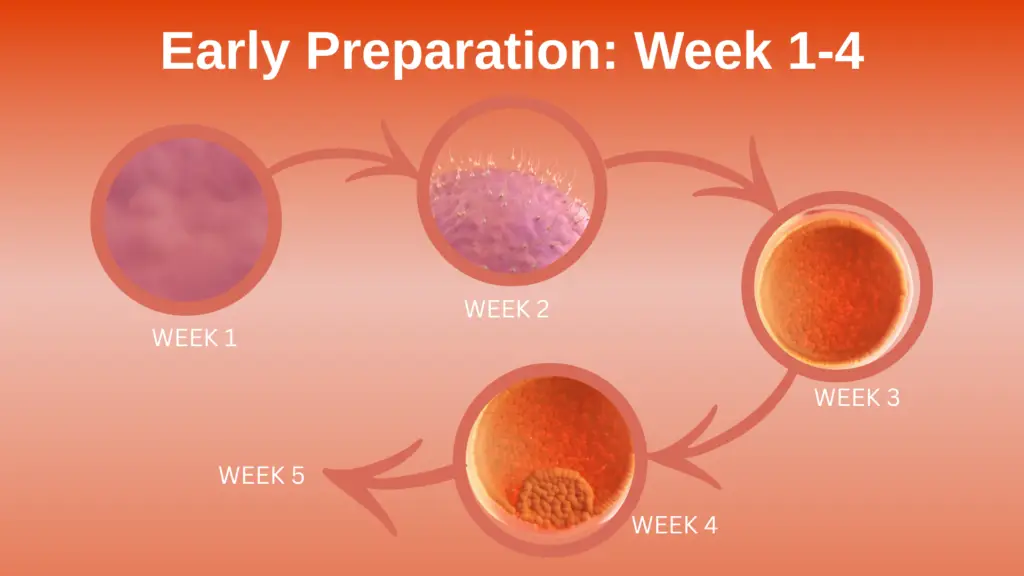
Physical and Emotional Changes in the Mother Weeks 1-4
Across Weeks 1–4, changes are subtle but real. Hormones influence energy, mood, and sleep. Emotionally, uncertainty is common. It is normal to feel excited one moment and anxious the next.
Physically, fatigue is often the earliest sign. The body is working hard behind the scenes.
Maternal Care During Weeks 1-4
Early care focuses on support and prevention. Start or continue prenatal vitamins with folic acid. Eat balanced meals, drink enough water, and rest when needed.
Gentle exercise like walking is beneficial. Managing stress is just as important as physical care.
Things to Avoid During Weeks 1-4
Avoid alcohol, smoking, and recreational drugs. Limit caffeine. Avoid raw or undercooked foods and unnecessary medications.
Early development is sensitive, and small choices matter.
Important Practical Tips
- Track your cycle
- Take folic acid daily
- Sleep well
- Eat whole foods
- Avoid self-diagnosing symptoms
Small habits now create a strong foundation later.
When to Contact a Doctor
Contact a healthcare provider if you experience severe pain, heavy bleeding, fever, or unusual discharge. Early guidance is always better than waiting.
Weeks 1-4 may feel quiet, but they are powerful. They are the opening chapter of a long and meaningful journey—one built on preparation, care, and trust in the body’s wisdom.